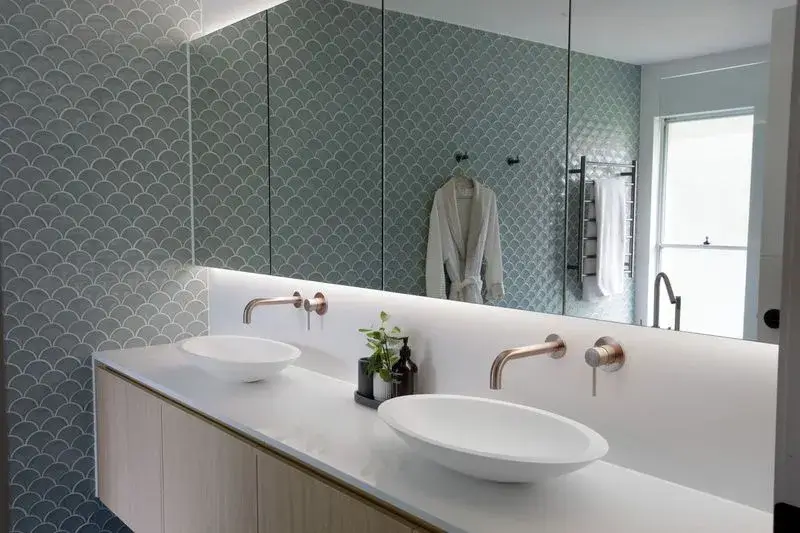
Good lighting supports the way you live in your home, therefore lighting and electrical details should shape how a bathroom feels and functions. But understanding that many of them cannot be added neatly after walls, tiles and cabinetry are complete is important.
Bathroom lighting is often treated as a finishing decision.
In reality, it should be planned as part of the layout of the vanity, mirrors, shower, cabinetry etc ready for electrical wiring behind walls.
For Brisbane homeowners renovating a bathroom, early planning can make the difference between a room that simply has enough light and one that feels comfortable, practical and well resolved throughout each part of the day.
The same applies to power points, extraction fans, heated towel rails, mirror demisters and underfloor heating.
Many of these elements require wiring, switching, wall backing or duct routes before the finishes are installed.
Once waterproofing, tiles and cabinetry are complete, changing them can become difficult and expensive.
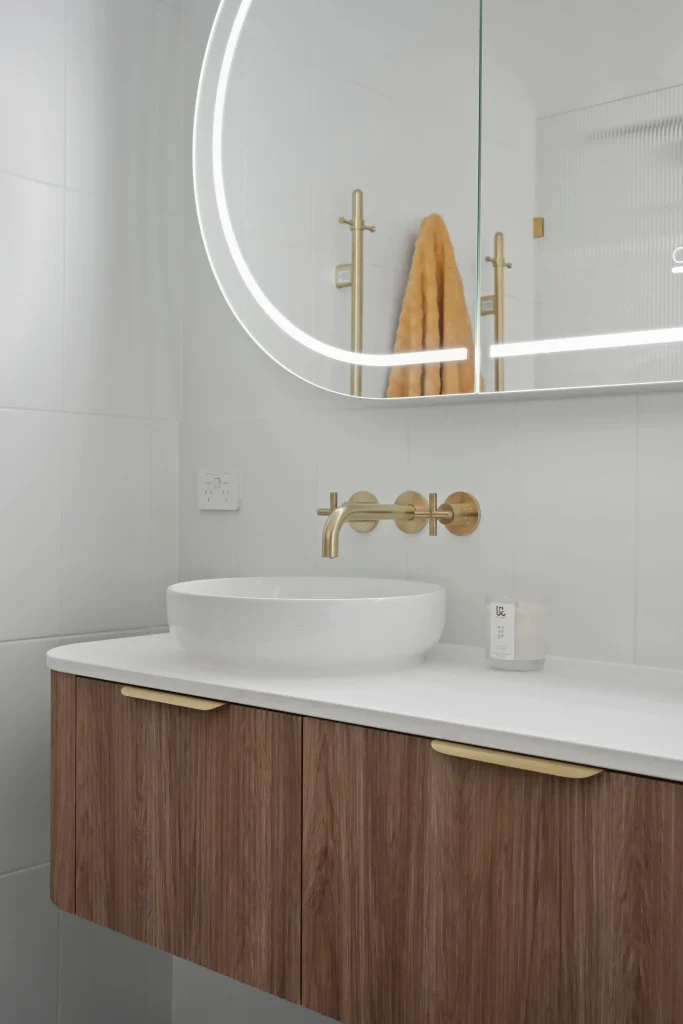
Layer the Lighting
A single bright ceiling light may provide enough illumination to move around the room, but it rarely creates the best bathroom experience.
It can also cast shadows across the face, making grooming and makeup more difficult.
A better bathroom lighting plan typically combines several layers.
Functional Lighting
Functional lighting provides the general illumination for the room.
The goal is to provide comfortable overall visibility without making the bathroom feel harsh or overly clinical.
Task Lighting
Task lighting provides focused light where it is needed most, making everyday activities around the vanity easier and more comfortable. Whether you’re shaving, applying makeup, styling your hair or simply getting ready for the day, good lighting helps you see clearly without straining your eyes.
One thing to consider is where the light is positioned. Lighting directly above the mirror can cast shadows under your eyes, nose and chin, making it harder to see your face clearly. Where possible, positioning light closer to face level will provide more even illumination.
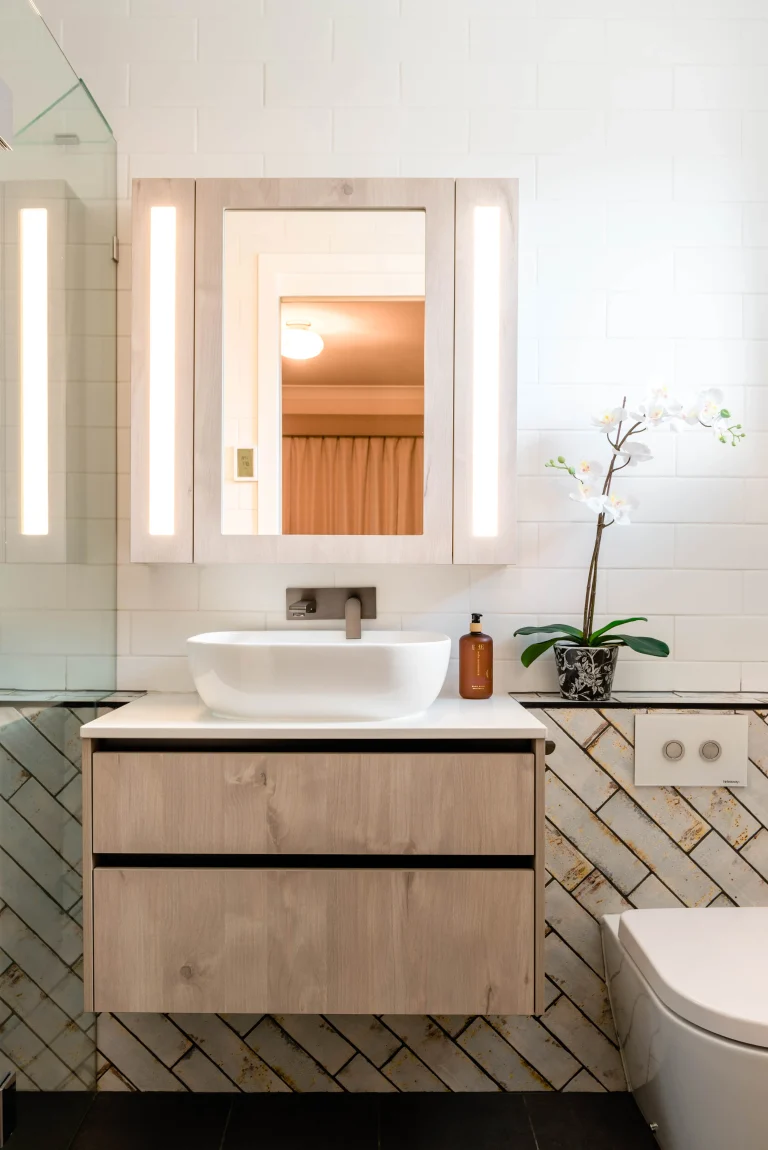
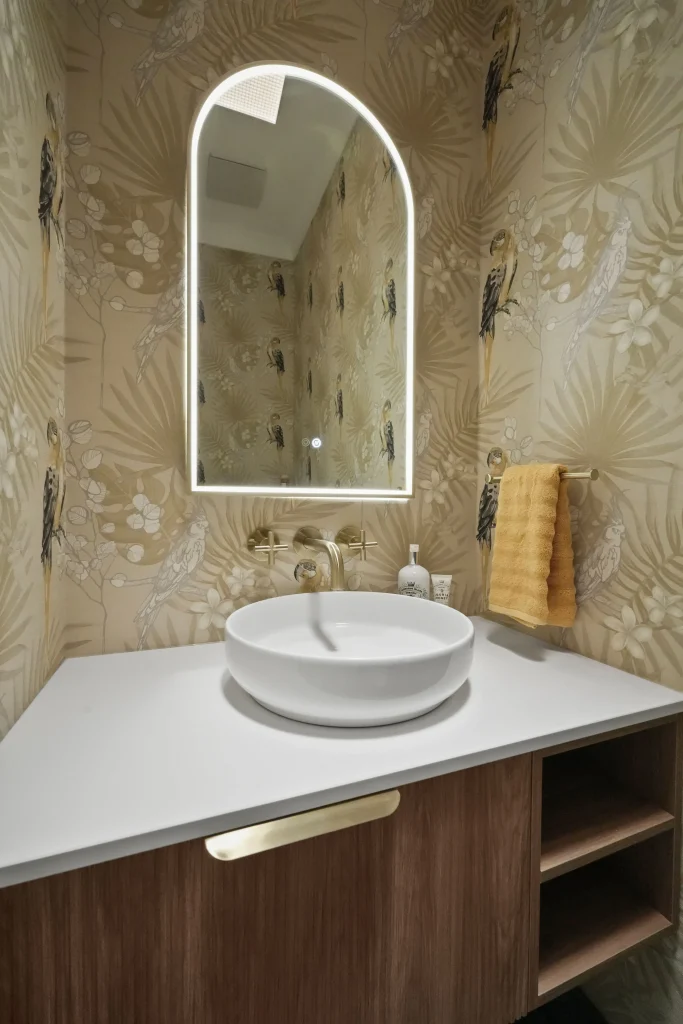
This could be achieved with wall lights either side of the mirror, an illuminated mirror or carefully positioned vanity lighting. The best solution will depend on the size of the bathroom, the mirror and how the overall space is designed.
Ambient Lighting
Not every trip to the bathroom needs the full brightness of overhead lighting. Ambient lighting can provide a softer, more relaxed atmosphere, particularly at night when you don’t want bright lights disturbing your sleep. Think of it as an accent or night light that adds another layer of comfort to the space.
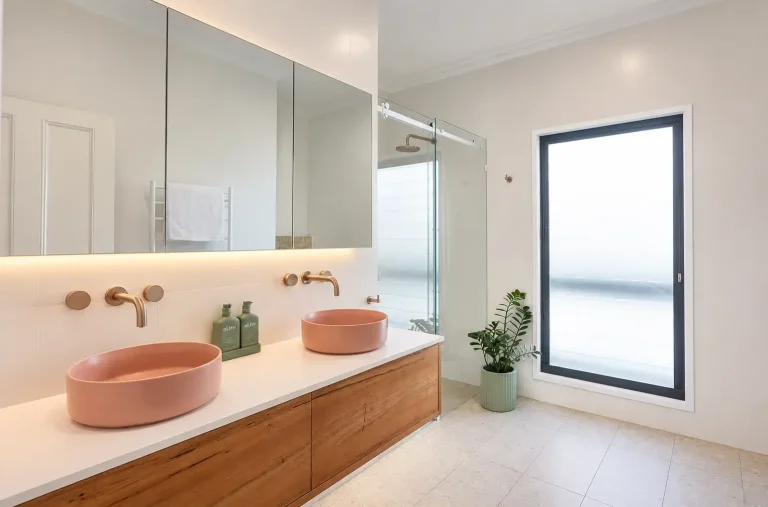
Consider adding subtle lighting beneath a floating vanity, behind a mirror or within a recessed shower niche. Low-level wall lighting or sensor-controlled lighting can also be a practical addition, providing just enough light to move around safely without switching on the main lights.
It’s a small design detail that can make a bathroom feel more inviting while adding another layer of functionality.
Natural Light
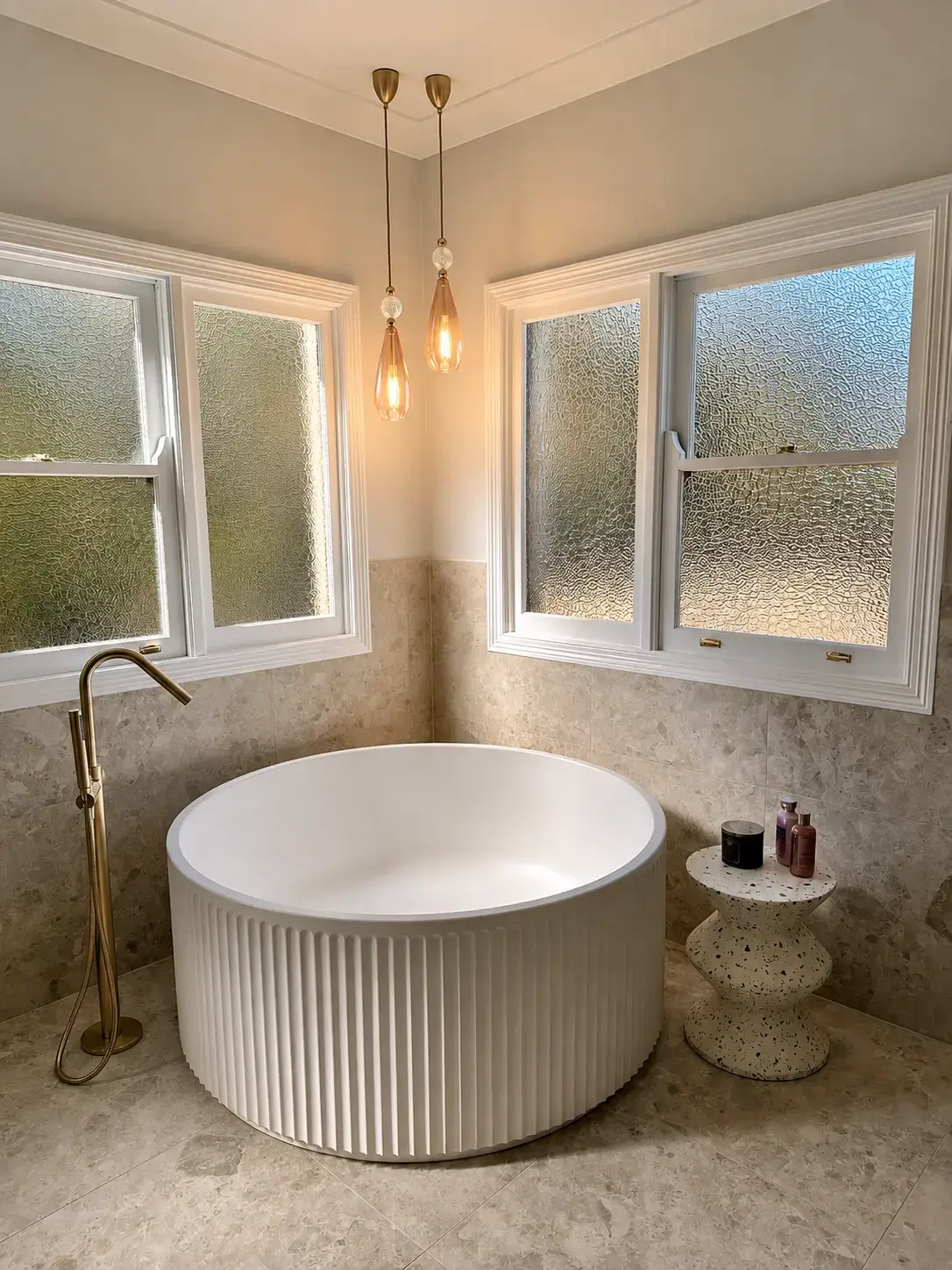
Natural light can make a bathroom feel brighter, more spacious and welcoming. Where possible, consider how windows, skylights or carefully positioned glazing can bring daylight into the space while maintaining privacy. Natural light also helps bring out the true colours and textures of your chosen finishes, making the bathroom feel more connected to the outdoors.
Put Power Where It Is Actually Useful
Power-point placement should be considered early in the bathroom design, thinking about how you will use the space every day. From charging electric toothbrushes and shavers to using hair dryers, straighteners and other grooming appliances, it’s worth considering what needs power and where you are most likely to use it. Also remember that items such as illuminated mirrors, mirror demisters and smart toilets generally require a dedicated hard-wired electrical connection, so these need to be factored into the electrical planning from the beginning.
For some bathrooms, installing power inside the vanity can be a great way to keep the benchtop clear while providing a handy spot to charge toothbrushes and shavers or store and use small appliances. However, the position needs to be carefully planned around drawers, shelving, the basin waste and plumbing, as well as the required electrical clearances.
The important thing is to coordinate your cabinetry, plumbing and electrical requirements together. A power point might look perfectly positioned on a plan, but if it ends up behind a drawer or in conflict with plumbing, it’s not going to be much use!
Design Effective Extraction
Good ventilation is essential in a bathroom. Showers and baths create a lot of moisture, and if that moisture isn’t removed effectively, it can lead to condensation, mould and damage to finishes over time.
When choosing your bathroom extraction, it’s important to consider more than just the fan itself. The size of the room will dictate the fan’s capacity to work effectively, is it existing or new ducting, and preferably that the air can be exhausted outside. These will all play a part in how well the system performs. You also need to consider the noise level of the fan when choosing.
Bathroom Lighting and Ventilation Checklist
Before construction begins, review whether the bathroom design has allowed for:
- Ambient ceiling lighting
- Mirror or vanity task lighting
- Low-level night or sensor lighting
- Natural lighting opportunities
- Extraction fan
- Power points near the vanity
- Power points inside cabinetry, where suitable
- Illuminated mirror
- Mirror demister
- Heated towel rail
- Underfloor heating
- Thermostat position
- Power and water for a smart toilet, if selected
- Switch positions
- Licensed electrician review before construction
These details may seem small individually, but together they have a significant impact on how well the bathroom works.
Frequently Asked Questions About Bathroom Lighting and Ventilation
How many types of lighting should a bathroom have?
Rather than relying on one fixture, many bathrooms benefit from layered lighting. This may include ambient lighting for general visibility, task lighting around the vanity and softer accent or night lighting.
Where should bathroom mirror lighting be placed?
Lighting that illuminates the face from the front or sides can reduce shadows compared with relying only on overhead lighting. The exact position should be coordinated with the mirror, vanity and overall lighting plan.
Do bathroom exhaust fans need to vent outside?
An effective extraction system should remove moist air outdoors rather than simply discharge it into another enclosed part of the building.
Should I put power points inside the bathroom shave cabinet or vanity?
Internal power can reduce benchtop clutter and make charging devices easier, but the position needs to be coordinated with plumbing, drawers, cabinetry and electrical requirements.
Is underfloor heating worth considering in a bathroom renovation?
Ideally, the lighting, power, heating and ventilation plan should be substantially resolved before demolition to assist the electician with behind wall placement prior to wall finishes and cabinetry installation.
When should bathroom electrical planning be finalised?
Ideally, the lighting, power, heating and ventilation plan should be substantially resolved before electrical rough-in and before wall finishes and cabinetry are installed.
Next Step
Light Shapes the Experience
At Bearcanvas Interiors, we help Brisbane homeowners bring lighting, fixtures, cabinetry, finishes and practical requirements together into one resolved bathroom design.
Planning a bathroom renovation in Brisbane?
Talk to Bearcanvas Interiors before your electrical rough-in is locked in so the lighting, power and ventilation can be considered as part of the complete design.